How to Choose the Right Packaging Box for Your Product - India Packaging

How to Choose the Right Packaging Box for Your Product

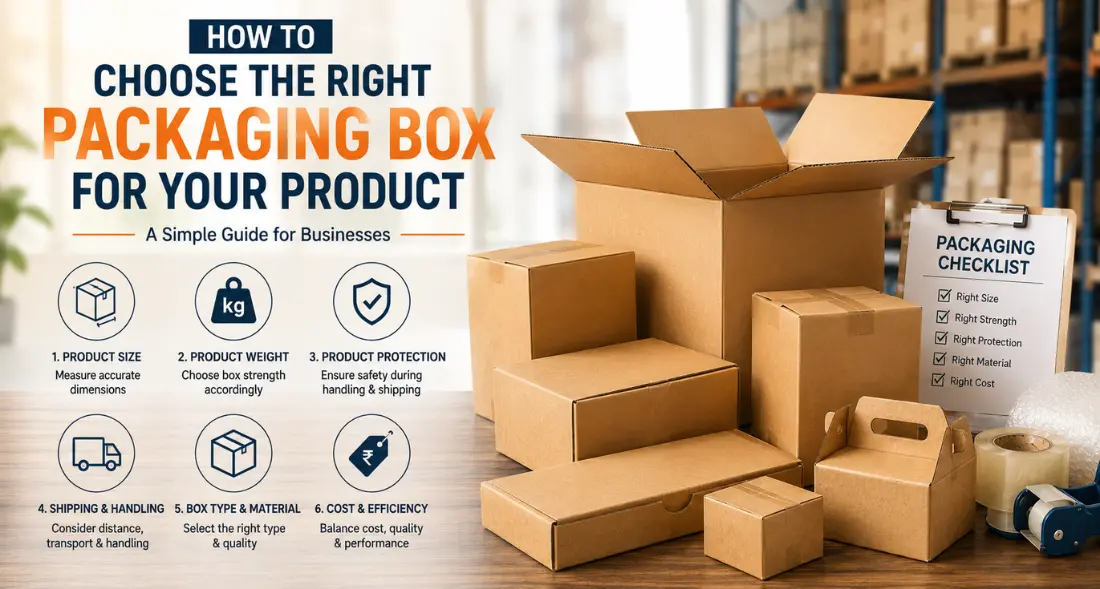
Choosing the right packaging box is not simply about finding a box that fits your product. The right packaging should balance product protection, size, strength, handling, presentation, storage, shipping, and cost. A box that works well for a lightweight garment may not be suitable for electronics, food products, industrial components, or fragile goods.

For businesses searching for how to choose the right packaging box, the best approach is to evaluate the product first and then match the packaging to its actual requirements. This guide explains the key factors to consider before selecting a packaging box for your product.

Why Choosing the Right Packaging Box Matters

Packaging directly affects how a product is handled from the moment it is packed until it reaches its destination.

A suitable box can help with:

  • Protecting the product during handling
  • Reducing unnecessary movement inside the box
  • Making packing and sealing easier
  • Improving storage and stacking
  • Supporting safer transportation
  • Creating a better product presentation
  • Controlling unnecessary packaging costs

Choosing packaging only by appearance or price can lead to problems later. A box may look suitable but still be too weak, too large, too small, or poorly suited to the product.

That is why choosing the right packaging box should be treated as a product-specific decision.

How to Choose the Right Packaging Box for Your Product - India Packaging

1. Start With Your Product

Before selecting a box, understand what you are actually packing.

Ask a few simple questions:

What is the product?
How large is it?
How much does it weigh?
Is it fragile?
How will it be transported?
Will it require internal protection?
Does the packaging need branding or printing?

These answers help narrow down the right packaging format.

For example, a lightweight apparel product may require very different packaging from an electronic item, glass product, food item, or industrial component.

Product characteristics to evaluate

Consider the product’s:

  • Length
  • Width
  • Height
  • Weight
  • Shape
  • Fragility
  • Surface sensitivity
  • Packaging quantity
  • Handling requirements

The more accurately these details are defined, the easier it becomes to select suitable packaging.

2. Measure the Product Correctly

One of the most common packaging mistakes is choosing a box based on an approximate product size.

Measure the product carefully in:

Length × Width × Height

The goal is to allow the product to fit comfortably without creating unnecessary empty space.

A box that is too small can make packing difficult and may put pressure on the product. A box that is too large can allow movement inside the package and may require additional filling material.

Should a packaging box be exactly the same size as the product?

Not necessarily.

The required internal space depends on whether the product needs:

  • Protective wrapping
  • Inserts
  • Partitions
  • Cushioning
  • Extra clearance for handling

Therefore, box dimensions should be selected according to the complete packed-product requirement, not just the product dimensions.

3. Consider Product Weight

Weight is another major factor when selecting packaging.

A lightweight item and a heavier product should not automatically use the same box specification.

For heavier products, businesses may need packaging with a stronger board structure and suitable construction.

When evaluating a packaging box, consider:

  • Product weight
  • Total packed weight
  • Stacking conditions
  • Handling method
  • Transportation distance
  • Frequency of movement

This is particularly important for businesses dealing with industrial packaging, shipping boxes, warehouse storage, and bulk transportation.

4. Understand Corrugated Box Ply

For businesses using corrugated packaging, ply structure is an important consideration.

You may commonly come across:

3 Ply Corrugated Boxes

These are commonly used for lighter and general-purpose packaging applications.

5 Ply Corrugated Boxes

These provide a stronger structure and can be suitable for a wider variety of shipping, storage, and commercial applications.

7 Ply Corrugated Boxes

These are generally considered for heavier or more demanding packaging requirements where additional board strength is needed.

The important point is that higher ply does not automatically mean better packaging for every product.

The right choice depends on the product, load, handling conditions, box dimensions, and application.

5. Choose the Right Box Style

The construction of the box is just as important as its material.

Different box styles are designed for different requirements.

Regular Slotted Boxes

A practical option for general shipping, storage, and commercial packaging.

Die-Cut Boxes

Useful when a specific shape, fit, opening mechanism, or customized construction is required.

Mailer Boxes

Often used for e-commerce, retail, and direct-to-customer shipping.

Self-Locking Boxes

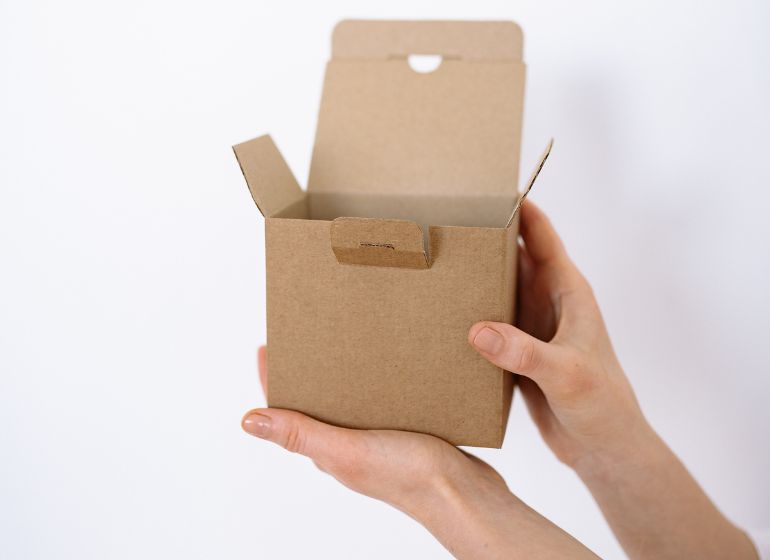
Designed for convenient closure and quick assembly without relying on complex sealing methods.

Folding Boxes

Useful where efficient storage and easy assembly are important.

Partition Boxes

Suitable when multiple items need to be separated inside the same package.

When selecting packaging box types, think about how the box will be packed, closed, handled, stored, and opened.

6. Think About Product Fragility

Fragility can completely change the packaging requirement.

A strong outer box may not be enough for a delicate product.

For fragile products, businesses may need:

  • Partitions
  • Internal supports
  • Protective inserts
  • Additional cushioning
  • A closer product-to-box fit
  • Suitable board strength

For example, packaging for electronics, bottles, crockery, glass items, and sensitive components may require more careful internal planning than ordinary packaging.

A useful question to ask

What could happen to the product if the box is dropped, compressed, tilted, or handled repeatedly?

The answer can help identify whether basic packaging is sufficient or whether additional protection should be considered.

7. Consider How the Box Will Be Shipped

A box that performs well in a warehouse may face completely different conditions during transportation.

Think about:

  • Local delivery
  • Courier shipping
  • Long-distance transportation
  • Truck movement
  • Multiple loading and unloading stages
  • Warehouse stacking
  • E-commerce delivery

For businesses shipping products across India, packaging should be selected according to the likely handling environment.

This is particularly relevant when choosing corrugated shipping boxes, e-commerce packaging boxes, and industrial packaging solutions.

8. Select Packaging Based on the Industry

The right packaging solution can also depend on the industry.

E-Commerce Packaging

E-commerce sellers generally need packaging that is practical for product packing, courier handling, storage, and customer delivery.

Mailer boxes, shipping boxes, die-cut boxes, and printed packaging may be considered depending on the product.

Food Packaging

Food businesses may require packaging designed specifically for food-related applications, such as pizza boxes, meal boxes, fruit boxes, or bottle packaging.

Garment Packaging

Apparel businesses may focus on easy packing, storage, presentation, and transportation of clothing and textile products.

Electronics Packaging

Electronic products may require carefully selected dimensions, protective structures, and appropriate packaging strength.

Industrial Packaging

Industrial goods may require heavier packaging structures for handling, warehousing, transportation, and protection.

The important principle is simple:

Choose packaging based on the product and its application, not simply based on what another business is using.

9. Decide Whether You Need Custom Packaging

Standard boxes are useful for many applications, but they are not ideal for every product.

A custom packaging box may be appropriate when you need:

  • Specific dimensions
  • A particular box style
  • Internal partitions
  • Custom printing
  • Specific closure methods
  • Product-specific fitting
  • Specialized presentation

Custom packaging can also help businesses avoid using unnecessarily large boxes when a more precise design would work better.

When should you choose custom packaging?

Consider custom packaging when:

  1. Your product does not fit standard box sizes.
  2. You need internal partitions or special protection.
  3. Your branding requires printed packaging.
  4. Standard packaging creates too much empty space.
  5. Your product requires a specific opening or closing style.

How to Choose the Right Packaging Box for Your Product - India Packaging

10. Consider Printing and Branding

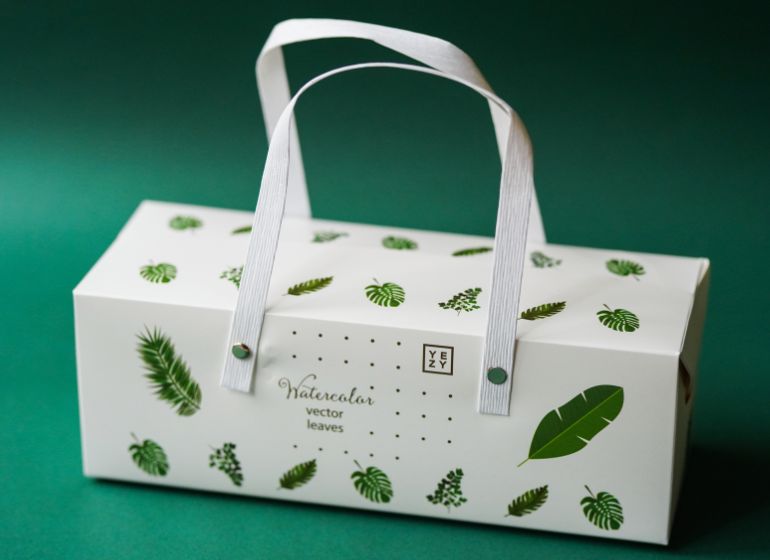
Packaging can also become part of the customer’s experience.

For many businesses, a printed box can communicate:

  • Brand identity
  • Product information
  • Handling instructions
  • Contact details
  • Visual branding
  • Packaging messages

Printed packaging can be particularly useful for e-commerce, retail, gifting, food, garments, and consumer products.

However, branding should be considered alongside the functional requirements of the box. Attractive packaging still needs to protect and handle the product properly.

11. Think About Storage Before Ordering

Packaging does not exist only when it surrounds a product. Unused packaging also needs to be stored.

Before placing a large packaging order, consider:

  • Available warehouse space
  • Box dimensions
  • Flat-packed storage
  • Expected monthly consumption
  • Seasonal demand
  • Reorder frequency

For businesses with limited storage space, foldable or efficiently stackable packaging options may be useful.

This is one reason procurement planning matters when selecting packaging boxes for businesses.

12. Consider Order Quantity and Business Demand

Packaging requirements can vary considerably between a new business and an established manufacturer.

Before ordering, estimate:

Average monthly usage + expected growth + seasonal demand

Then compare this with:

  • Minimum order quantity
  • Available storage
  • Delivery timeline
  • Repeat order frequency

Ordering too little can result in repeated urgent purchases. Ordering too much may create storage problems and unnecessary inventory.

A practical packaging procurement plan can help businesses maintain a consistent supply without overstocking.

13. Packaging Cost Is More Than the Box Price

One of the biggest mistakes businesses make is comparing packaging purely on price per piece.

The cheaper box may not always be the more economical option.

Consider the total impact of the packaging, including:

  • Product damage
  • Excess material
  • Storage space
  • Packing time
  • Shipping efficiency
  • Printing requirements
  • Repeat ordering
  • Handling difficulty

The right packaging is the one that provides an appropriate balance between performance, usability, product protection, and cost.

14. Use a Simple Packaging Selection Checklist

Before finalizing packaging, check the following:

Product

  • What are the product dimensions?
  • What is the product weight?
  • Is it fragile?

Box

  • What box size is required?
  • Which material is suitable?
  • What ply structure is appropriate?
  • Which box style is needed?

Protection

  • Does the product need inserts or partitions?
  • Will it experience multiple handling stages?
  • Will it be stacked?

Business

  • What quantity is required?
  • How frequently will the boxes be reordered?
  • How much storage space is available?

Branding

  • Is printing required?
  • Is a custom design needed?

Delivery

  • Where will the product be shipped?
  • How much transportation and handling will it experience?

This checklist can make packaging decisions much easier.

Packaging Box Selection: A Simple Example

Imagine a business selling apparel online.

The product is:

  • Lightweight
  • Not highly fragile
  • Sold directly to customers
  • Shipped through courier services

The business may prioritize:

  • Suitable box dimensions
  • Lightweight packaging
  • Easy packing
  • Good presentation
  • Practical shipping design
  • Optional branding

Now consider a business shipping industrial components.

Its priorities may instead include:

  • Higher box strength
  • Appropriate load capacity
  • Durable construction
  • Reliable handling
  • Internal protection
  • Transportation suitability

The two businesses may both need packaging boxes, but the correct solution is completely different.

When Should You Talk to a Packaging Manufacturer?

You should consider discussing your requirement with a packaging manufacturer when:

  • You need multiple packaging sizes
  • Your product does not fit standard boxes
  • You need recurring supply
  • You require printed packaging
  • You need industrial packaging
  • You are changing your existing packaging
  • Your current box is too large or too weak
  • You want to improve packaging efficiency

A professional packaging manufacturer can understand your product requirements and help you evaluate suitable packaging options.

Why Businesses Work With India Packaging

India Packaging is a Mumbai-based packaging box manufacturer established in 2017, offering packaging products for a variety of business requirements.

Its range includes corrugated boxes, carton boxes, mailer boxes, pizza boxes, garment boxes, die-cut boxes, printed packaging boxes, industrial packaging boxes, paper boxes, wooden packaging products, corrugated sheets, and packaging rolls.

The business focuses on:

  • In-depth industry knowledge
  • Quality packaging products
  • Timely order completion
  • Qualified and trained professionals
  • Transparent business dealings
  • Competitive pricing

Businesses can discuss their product type, packaging dimensions, quantity, application, and customization needs to identify a suitable packaging option.

img not found
img not found
img not found

Your Questions Answered

Start with your product size, weight, shape, fragility, and shipping requirements. Then consider box style, material, ply structure, internal protection, quantity, and customization needs.

There is no single best shipping box for every product. Corrugated shipping boxes, mailer boxes, and die-cut boxes may all be suitable depending on product weight, size, handling conditions, and transportation requirements.

The suitable ply depends on the product, load, dimensions, handling, stacking, and shipping conditions. 3 ply, 5 ply, and 7 ply are used for different applications.

Not always. Excess space can allow products to move inside the package and may require additional protective material. A well-fitted box is generally a better starting point.

Custom packaging is useful when standard sizes do not fit your product properly or when you need specific dimensions, printing, partitions, closure styles, or structural features.

Provide product dimensions, weight, product type, application, quantity, preferred material, shipping conditions, and any printing or customization requirements.

Mailer boxes, corrugated shipping boxes, and die-cut boxes can be suitable for e-commerce depending on product size, weight, protection requirements, and brand presentation.

Start by selecting the right box size, avoiding unnecessary empty space, choosing an appropriate board structure, planning order quantities, and reviewing the complete cost of packaging rather than only the unit price.

Final Thoughts

The right packaging box is not simply the strongest, cheapest, or most attractive option. It is the one that fits the product, application, handling environment, storage requirements, business process, and customer expectations.

Before ordering packaging, define the product clearly, measure it accurately, understand its protection needs, select an appropriate box style, and consider how the package will be transported and stored.

For businesses looking for custom packaging boxes, corrugated packaging, shipping boxes, carton boxes, printed packaging, or industrial packaging solutions, a clear requirement is the best starting point for finding the right solution.

Leave a Comment

Your email address will not be published. Required fields are marked *